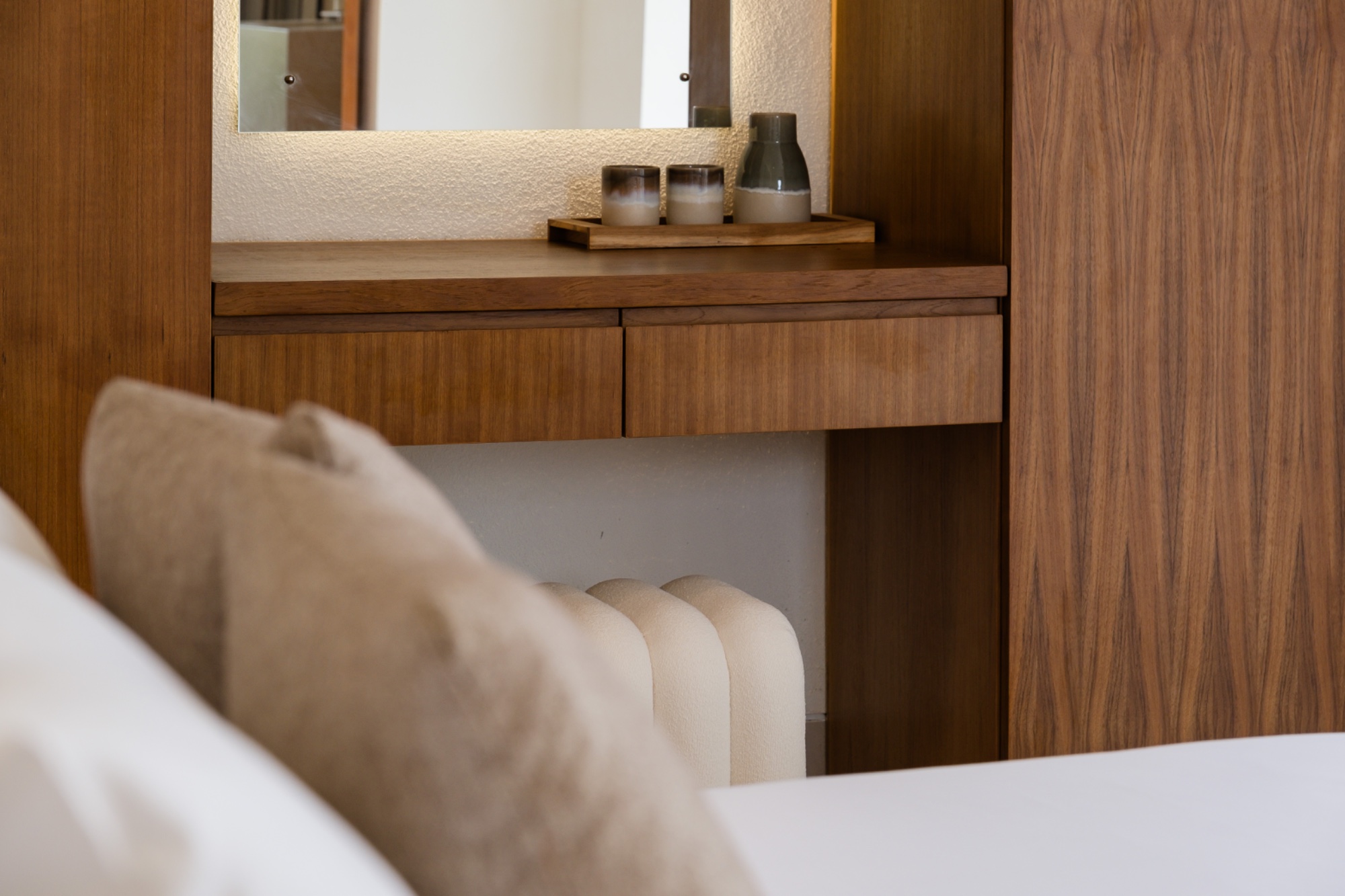
Teak — the generalist
Teak's reputation is earned: its natural oils resist water, rot and insects without chemical treatment, and its tight, stable grain finishes beautifully. That combination makes it the only one of our four hardwoods equally suited to structural framing and fine furniture. If you only wanted to use one wood throughout a project, teak would be the closest thing to a universal answer — though not the most cost-efficient one for every role. Full details on our Teak material page.
Merbau — the workhorse for decking and floors
Merbau is denser than teak, with a rich red-brown tone, and it's highly resistant to termites. Where it earns its keep is decking, flooring and other high-traffic surfaces that take repeated wear — areas where teak's finer grain would be somewhat wasted. One practical note: fresh merbau can release tannins that temporarily stain light-colored surfaces when wet, which we account for during installation. More on Merbau.
Bengkirai — built for sun and rain
Also known as yellow balau, bengkirai has excellent outdoor performance in a warm, golden tone that weathers gracefully to silver-grey if left untreated — similar to teak's weathering pattern, at a different price point. It's our choice for pergolas, terraces and other structures that live outdoors year-round but don't carry the same structural load as a home's frame. See the full picture on our Bengkirai page.
Ulin Ironwood — where failure isn't an option
Ironwood is one of the hardest woods in the world, and it barely absorbs water — meaning it resists rot for decades even in direct ground contact, a condition that would eventually defeat most other timbers. That makes it the obvious choice for foundational posts and substructure: the parts of a home that are hardest to access or replace later, where durability simply has to win over cost or ease of finishing. Details on Ulin Ironwood.
How we actually choose
In practice, most Magic Wood homes use more than one of these woods — ironwood below ground and in structural posts, teak or bengkirai for framing and exterior joinery, merbau for decking, and teak again for interior furniture and fine carpentry. The right mix depends on your site's climate, your budget, and which surfaces will see the heaviest use. We walk through this with every client during the design stage — see how materials fit into the full build on our prefab homes page.
The quick version
Teak: structure and furniture, the generalist. Merbau: decking and floors, built for traffic. Bengkirai: exterior structures, warm tone, excellent weathering. Ironwood: foundations and posts, where permanence is non-negotiable. All four carry a 5–15 year warranty depending on application.